Skip to content

Commoning & common rights

Rights written into
the land itself.

The ponies on the road, the cattle on the verge and the pigs under the oaks in autumn are not decoration. They are there because of common rights — a set of legal entitlements attached to houses and smallholdings across the Forest, held by families who have worked this landscape for centuries.

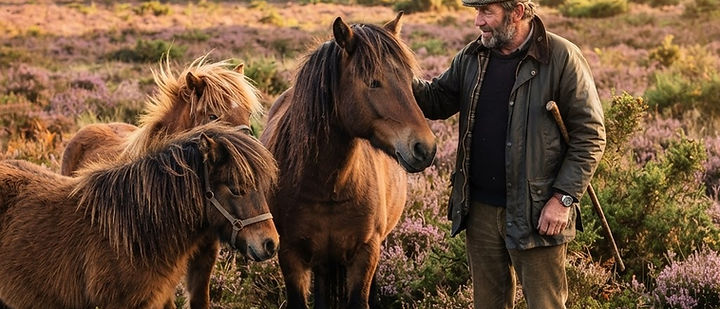
A New Forest commoner standing with three ponies on open heather heathland

A commoner with his ponies on the open Forest

Commoners
Around 700
Rights held in
The Atlas of Rights
Animals
Ponies, cattle, donkeys, pigs

The basics

A right held by a house, not a person.

New Forest common rights date back to before the Norman Conquest. When the Forest was made a royal hunting ground in 1079, the people already living here kept their customary rights to graze, take wood and turn out pigs — rights the Crown recognised and the Verderers administered. They have been re-confirmed by Act of Parliament several times since, most importantly in 1877.

Crucially, a right is attached to a specific property. Buy a cottage with a right registered to it and you become a commoner; be a lifelong forester with no such property and you are not. Every right is recorded in the Verderers' Atlas of Rights, and different properties carry different rights.

Around 700 people still hold them. Most keep a handful of ponies or cattle rather than a herd, and almost all have another job — commoning has rarely paid anyone's way entirely.

The Forest, worked

Livestock, law and smallholdings

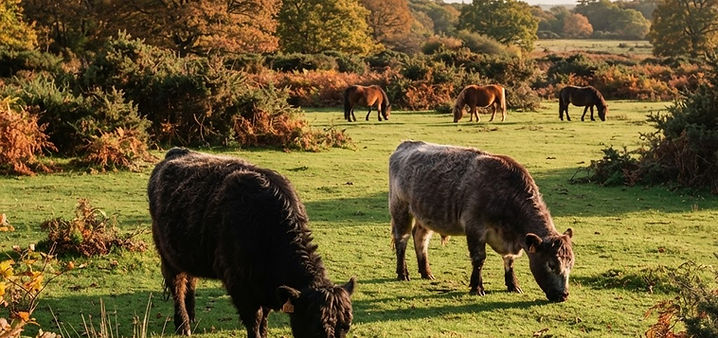
New Forest cattle grazing on an open lawn with ponies behind
Cattle and ponies sharing the open lawns — the grazing is what keeps them open
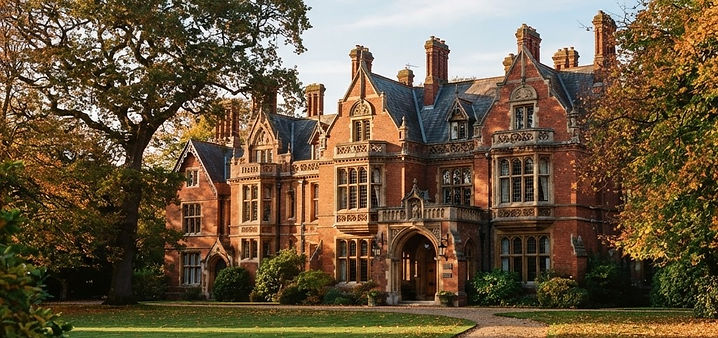
The red-brick Verderers' Hall at Lyndhurst behind a green lawn
The Verderers' Hall at Queen's House, Lyndhurst — where the court sits
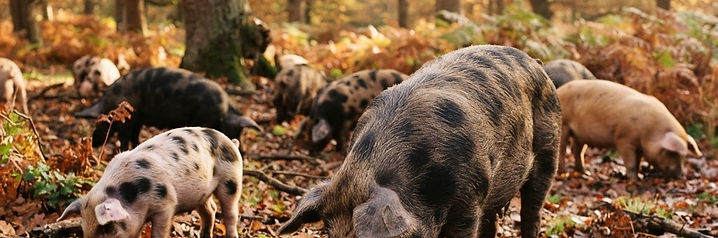
Pannage pigs rooting for acorns on the leaf-strewn floor of an oak wood
Pannage pigs clearing the acorn drop for sixty days each autumn
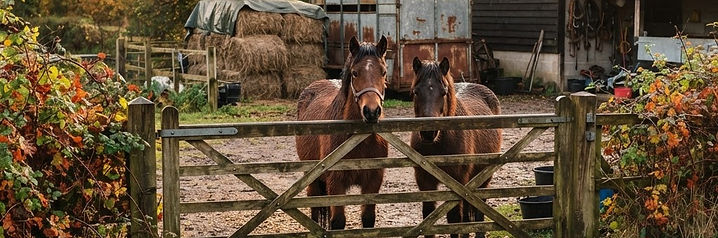
Two ponies looking over a farm gate with hay bales and a trailer behind
Hay, a gate and a trailer: the unglamorous half of commoning

The rights themselves

Six rights, four still used

01Still exercised

Common of pasture

The important one. It allows a commoner to turn out ponies, cattle, donkeys and mules onto the open Forest — free grazing for the animals, and the reason the heath stays open. Some large estates also hold pasture rights for sheep, though they are rarely used.

02Still exercised

Common of mast (pannage)

The right to turn pigs out in the autumn to eat fallen acorns and beech mast. It feeds the pigs and clears the acorns that would otherwise poison ponies and cattle. Pannage usually runs for about sixty days from late September.

03Still exercised

Estovers (fuelwood)

The right to a stipulated amount of firewood from the Forest for certain properties — a small but tangible reminder that the forest was once a working resource rather than a view.

04No longer exercised

Common of turbary

The right to cut peat turves for a property's own fuel. The bogs are now protected for their wildlife and water, so the right survives on paper but is never used.

05No longer exercised

Common of marl

The right to dig clay to improve farmland. Modern fertilisers made it pointless long ago, and it is no longer exercised anywhere in the Forest.

06Historic practice

Bracken and fern

Collecting bracken after Michaelmas for animal bedding and litter. It survives as a memory of when nothing on the Forest went unused.

“
Commoning isn't just about animals. It's about people. It is about family, community, and New Forest skills.
The Commoners Defence Association
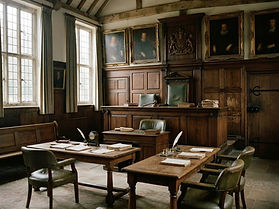
The panelled interior of the Verderers' court room with a wooden bench and portraits
Inside the court at Lyndhurst

Who makes it work

An ancient court, a modern working system

Commoning is not a free-for-all. It runs on paperwork, inspections and people whose job is the welfare of animals they do not own.

The Verderers

An ancient court that protects the commoners' rights and the landscape they depend on. Its powers were re-confirmed and reconstituted by the New Forest Act 1877, which made the court a representative of the commoners rather than the Crown.

The Clerk & the Atlas

Rights are attached to property, not to people, and every one of them is recorded in the Verderers' Atlas of Rights. A new owner applies to the Clerk, who confirms the right and allocates a brand for that property's animals.

The Agisters

The Verderers' practical arm on the ground: checking stock, attending road accidents, supervising drifts and tailing, and collecting the marking fee that lets an animal legally run on the Forest.

Forestry England

Manages the Crown land on which the animals graze, working within the same Acts that protect the rights. The ponies and cattle are what keep that land open heath and lawn rather than scrub.

The Commoners Defence Association

Formed in 1909 to defend the rights against encroachment, and still the commoners' collective voice on everything from road safety to housing and the pony market.

The wider community

Behind every animal on the Forest is a family, a holding and often a backup field. Commoning is a way of life passed down through generations, not a hobby picked up in retirement.

How it works in practice

Brands, tails and the autumn round-up

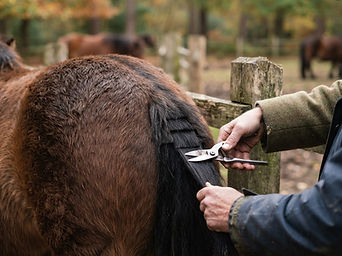
Hand clippers trimming a pony's tail into a stepped pattern at a pound

Branding, marking and tailing

Every animal turned out carries its owner's brand, registered to a property through the Verderers' Clerk, and pays a marking fee to the local agister. At the autumn drifts the agisters cut a pattern into each pony's tail — the tailing — so that a glance tells them which part of the Forest that animal belongs to and who to call if it is injured.

  • Brands are allocated to a property, not a person
  • Marking fees are paid per animal, per year
  • Tail patterns identify the agister's area
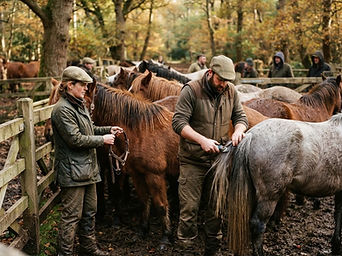
Ponies held in a wooden pound while their owners and an agister inspect them

The autumn drift

Through late summer and autumn, commoners and agisters gather the herds into pounds to check condition, worm, count and tail every animal. It is the one time of year the whole system becomes visible at once: ponies, owners, agisters and the paperwork that has backed them for centuries.

  • Drifts run through the late summer and autumn
  • Animals are counted, checked and marked
  • Pannage pigs follow the acorn drop

A way of life under pressure

Why it survives at all.

The ponies are often called the architects of the Forest — without their grazing and browsing the open lawns and heath would close over with gorse, bramble and scrub. The landscape everyone comes to see is the product of animals being turned out under these rights.

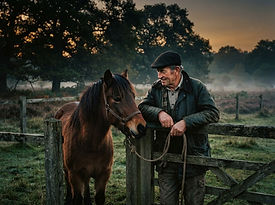
A commoner leaning on a gate beside a pony at dusk
The last check of the evening
  • There is rarely much money in it. The pony market is weak and the costs — marking fees, hay, vets, fencing, fuel — fall on the commoner.
  • Back-up land is the hard part: animals need somewhere to graze when they are not on the Forest, and affordable holdings close to the Forest are scarce.
  • Housing within the Forest is increasingly out of reach for the families who work it, and properties with rights are often bought as retirement or holiday homes by people with no intention of turning an animal out.

So when you slow down for stock on a forest lane, or shut a gate behind you, you are doing something practical for the oldest working system in the New Forest.

Want to know what lives alongside the stock? The wildlife guide covers the ponies, deer, heathland birds and reptiles, and the practical pages cover driving, dogs and gates.

More guides

Sponsorship

Put your business in front of visitors planning a New Forest break — in town guides, our outdoor pages, the diary and the directory.

Promote your business