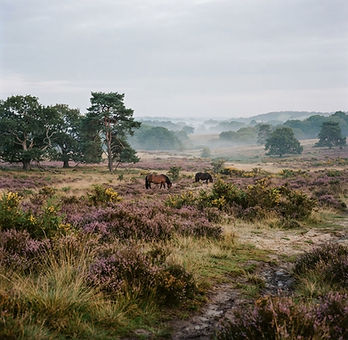
Bolderwood
Near Lyndhurst
Some of the oldest Douglas fir in the forest — some dating to the 1860s — with a deer viewing platform over the open fields, waymarked walks, toilets and the Canadian War Memorial where troops gathered before D-Day.
The largest landholder in the forest
The Forestry Commission works here through Forestry England, and no one holds more of the New Forest: 47% of the national park, over 115 square miles, and 85% of the green space the public can actually reach. It is a working forest — timber, deer and conservation alongside the car parks, waymarked trails and the New Forest Code that keeps the place livable for everything else.
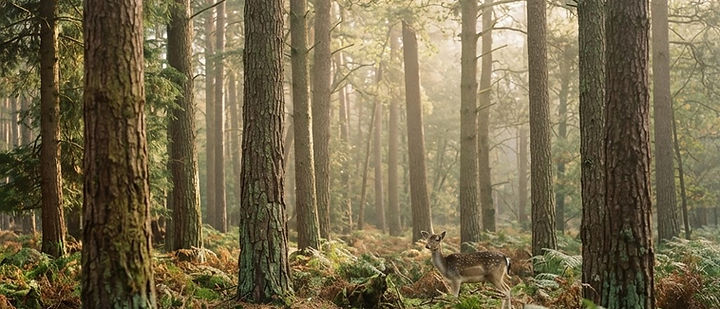
Inside an inclosure at Bolderwood
The places in their care
6 places · Forestry England
Near Lyndhurst
Some of the oldest Douglas fir in the forest — some dating to the 1860s — with a deer viewing platform over the open fields, waymarked walks, toilets and the Canadian War Memorial where troops gathered before D-Day.
Rhinefield, near Brockenhurst
A collection of trees from around the world, giant redwoods, a sensory sculpture trail and the start of the Tall Trees Trail through the Rhinefield Ornamental Drive.
Near Lyndhurst
The largest and most famous tree in the forest, a pollarded oak around 500 years old, with a path looped around it so its roots and spread stay undisturbed.
Near Beaulieu
The forest's largest area of fresh water and one of the most important ponds in the country for wildlife — look, photograph, and please keep out of the water.
Near Burley
Open heath, old enclosures and big skies — the easiest place in the forest for a picnic, a short walk or an evening of watching the light go.
Near Brockenhurst
Heather, gorse and grazing ponies with long views over the open forest. The classic New Forest afternoon, with a car park and nothing else.
Looking after the forest
The land is managed as inclosures for timber, ancient and ornamental woodland, and open forest — heath, acid grassland and mire. Each has its own challenges and its own prescriptions.
Across the inclosures, conifer stands are being gradually thinned and replanted with a higher proportion of native broadleaf — a more resilient forest, while still producing sustainable timber.
Oaks, beeches and hollies over 400 years old are left largely alone, and deadwood stays where it falls. That is what feeds the fungi, insects, bats and birds that make old woodland worth having.
Herds of fallow deer are counted and managed so that woodland can regenerate, while commoners' ponies, cattle, donkeys, sheep and pigs graze the open forest under rights centuries old.
The wet heath and valley mires are internationally important, hold carbon in their peat and slow water down through the forest — practical conservation that also protects the villages downstream.
No barbecues or open fires, no feeding or touching the animals, park in the car parks, and keep to 40mph on the forest roads. Simple rules, and the reason the forest still works.
If you go
The other guardians
Find them on the mapSponsorship
Put your business in front of visitors planning a New Forest break — in town guides, our outdoor pages, the diary and the directory.
Cookies & booking links
We set the cookies needed to run the site. With your permission we also let our booking partners set theirs, so a stay booked after clicking through from here is credited to us — you pay exactly the same either way. Nothing optional loads until you choose. Read the cookie policy.
You can change your mind any time from Cookie settings in the footer.